
Image: Navita Ngolo
By Florindo Chivucute
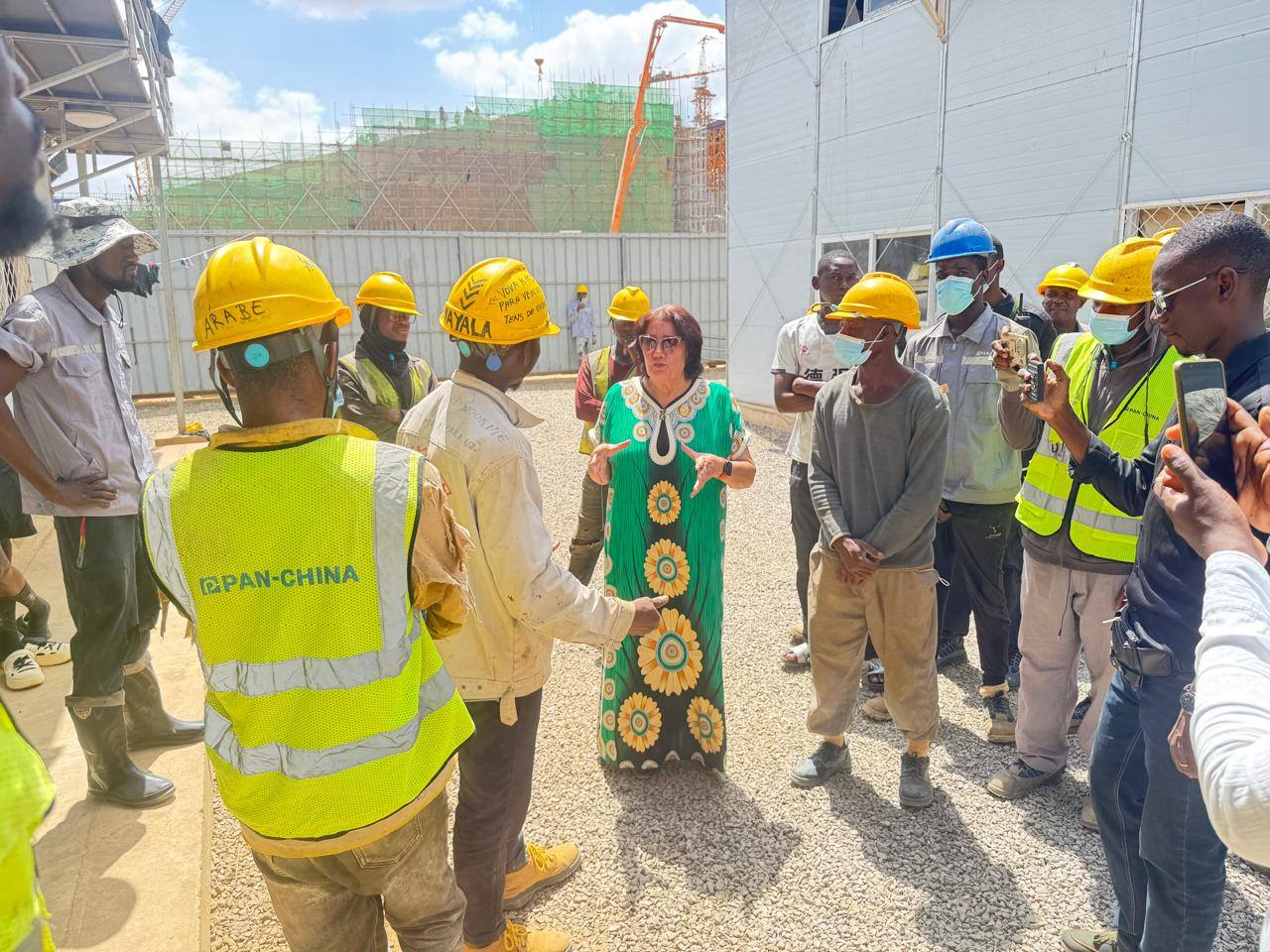
The recent visit by members of Angola’s National Assembly to the Pan China construction site near the Kilamba Centrality has brought to light deeply disturbing allegations that go far beyond a single company. At stake is not only the treatment of workers, but the credibility of Angola’s labor protections, oversight institutions, and commitment to human dignity.
According to the parliamentary delegation, five workers reportedly lost their lives following an incident in January 2026. That fact alone demands urgent, independent investigation. But what the delegation claims to have witnessed on site paints an even more troubling picture: Angolan workers allegedly housed in overcrowded 20-foot containers, up to 10 people per unit – without air conditioning, while foreign workers are accommodated in significantly better conditions. Sanitation facilities reportedly resemble “pocilgas,” and meals provided to national workers are described as inadequate and undignified.
Equally alarming are claims that Angolan workers are earning 70,000 kwanzas, below the legally mandated national minimum wage of 100,000 kwanzas. If accurate, this would constitute a direct violation of Angolan labor law. Workers also reportedly fear retaliation or dismissal for speaking to members of parliament.
These are not minor administrative issues. They are allegations of structural labor exploitation, discrimination, and institutional failure.
A Broader Pattern
The Pan China case does not emerge in isolation. It reflects a deeper and more persistent problem: weak enforcement of labor protections, unequal treatment between national and foreign workers, and a troubling pattern of impunity for companies perceived to enjoy political protection.
When oversight bodies fail to act decisively, as appears to have happened when the parliamentary delegation sought engagement with the General Labor Inspectorate (IGT), the message sent to workers is clear: your rights are negotiable.
Angola’s Constitution guarantees the dignity of the human person. Its labor laws establish minimum wage standards and safety protections. The country is also a party to multiple International Labour Organization (ILO) conventions. Yet laws without enforcement become symbolic rather than substantive.
Development at What Cost?
Angola continues to position itself as an attractive destination for foreign investment, particularly in infrastructure and construction. Investment and development are essential for economic growth. But development that is built on unsafe working conditions, wage violations, and discriminatory treatment is not sustainable development – it is extraction under another name.
If companies operating in Angola are allowed to disregard minimum wage standards, fail to provide safe accommodations, or operate without effective labor inspections, then the issue is no longer corporate misconduct alone. It becomes a governance problem.
True development must prioritize human dignity alongside infrastructure.
The Urgent Need for Accountability
What is required now is not political rhetoric, but action:
- An independent and transparent investigation into the reported deaths of the five workers.
- A full labor inspection of the Pan China site and other companies facing similar allegations.
- Enforcement of minimum wage and occupational safety standards without exception.
- Protection for workers who report abuses.
- Public disclosure of findings and meaningful accountability where violations are confirmed.
The protection of workers is not optional. It is a legal obligation and a moral imperative.
A Test for Angola’s Institutions
The Pan China case represents a test, not only for one company, but for Angola’s institutions. Will oversight bodies act independently? Will labor laws be enforced equally? Will the dignity of Angolan workers be treated as non-negotiable?
Angola cannot afford a development model that tolerates exploitation in exchange for infrastructure. Nor can it sustain a system in which certain actors operate above scrutiny.
The lives and dignity of workers must weigh more than political convenience or economic expediency.
If Angola seeks a future rooted in rule of law, accountability, and inclusive growth, then this moment demands clarity: development must serve people, not sacrifice them.