
Image: iidc-cd
By Friends of Angola
As Angola approaches its next general elections, the country stands at a critical crossroads. The electoral process will not only determine its next political leadership but will also serve as a defining test of the country’s commitment to democratic governance, the rule of law, and the protection of fundamental freedoms.
For many Angolans, the upcoming elections represent an opportunity to strengthen democratic institutions, restore public confidence, and reaffirm the principle that political power derives from the free and genuine will of the people. Achieving these goals requires an electoral environment that is transparent, inclusive, competitive, and peaceful.
Growing International Concern
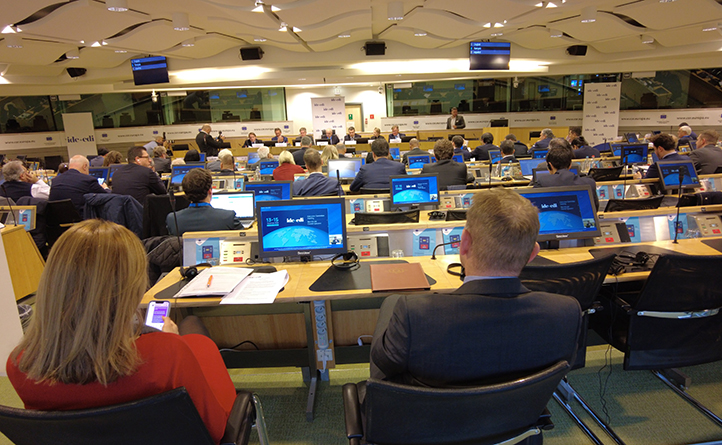
The international community is closely monitoring developments in Angola. During its recent General Assembly, the Centrist Democrat International (CDI-IDC) adopted a resolution expressing concern over the country’s democratic trajectory. The resolution highlights issues including alleged attempts to alter constitutional provisions governing presidential term limits, concerns about judicial independence, restrictions on civic space, and the need to safeguard democratic institutions.
The resolution also calls for respect for the rule of law, constitutional governance, human rights, and the establishment of an international election observation mechanism to strengthen confidence in future electoral processes.
These concerns echo observations made in recent years by various regional and international organizations, which have emphasized the importance of protecting civil liberties, ensuring institutional independence, and promoting credible elections.
Free and Fair Elections Require Strong Institutions
The legitimacy of any democratic election depends on the confidence citizens place in the institutions responsible for administering the process. This includes an independent National Electoral Commission, an impartial judiciary, professional security forces, and media institutions that provide equitable access and balanced coverage for all political contestants.
Equal opportunities for political parties, transparent voter registration, unhindered political participation, freedom of expression, freedom of assembly, and timely publication of election results are essential components of a credible electoral process.
The integrity of the electoral process should not only be guaranteed on election day but throughout the entire electoral cycle—from voter registration and campaigning to vote counting, dispute resolution, and the peaceful transfer of power.
The Essential Role of Civil Society
Civil society organizations play a vital role in strengthening democratic accountability. Through civic education, election observation, voter awareness campaigns, independent research, and advocacy, they help ensure that citizens can participate meaningfully in public affairs.
Independent media, religious institutions, academic institutions, youth organizations, women’s groups, and community leaders also contribute to fostering a democratic culture built on dialogue, tolerance, accountability, and peaceful political participation.
An informed and engaged citizenry remains one of the strongest safeguards against democratic backsliding.
Election Observation Enhances Public Confidence
Independent domestic and international election observation has become an internationally recognized practice for promoting transparency and strengthening public trust in electoral outcomes.
The recommendation by the CDI-IDC to establish an international election observation mechanism reflects the importance of ensuring impartial assessments of electoral integrity. Such observation can increase transparency, reduce political tensions, and reinforce confidence among voters, political parties, and the international community.
Democracy Is More Than Elections
While elections are a cornerstone of democracy, democratic governance extends beyond election day. It requires independent institutions, judicial impartiality, respect for constitutional limits, accountability, a free press, and the protection of fundamental rights and freedoms.
A democratic system can only flourish when political competition occurs on a level playing field and when all stakeholders respect both the electoral process and the will of the electorate.
Looking Ahead
Angola has an important opportunity to demonstrate its commitment to democratic principles and constitutional governance. Peaceful, transparent, and credible elections would strengthen public trust, improve institutional legitimacy, enhance investor confidence, and contribute to long-term political stability and sustainable development.
As the country moves toward the polls, all stakeholders—including government institutions, political parties, civil society organizations, religious leaders, the media, and citizens—share a collective responsibility to uphold democratic values, reject political violence, respect the rule of law, and ensure that every eligible voter can freely exercise their constitutional right to vote.
The future of Angola’s democracy will be shaped not only by the outcome of the elections but also by the integrity, transparency, and inclusiveness of the process itself.
About Friends of Angola
Friends of Angola (FoA) is a U.S.-based, nonprofit 501(c)(3) international advocacy organization founded in 2014 and headquartered in Washington, D.C. FoA advances democracy, human rights, transparency, good governance, and the rule of law in Angola through research, policy advocacy, civic education, capacity building, and civil society strengthening. The organization holds Special Consultative Status with the United Nations Economic and Social Council (ECOSOC) and Observer Status with the African Commission on Human and Peoples’ Rights (ACHPR).