
By Friends of Angola
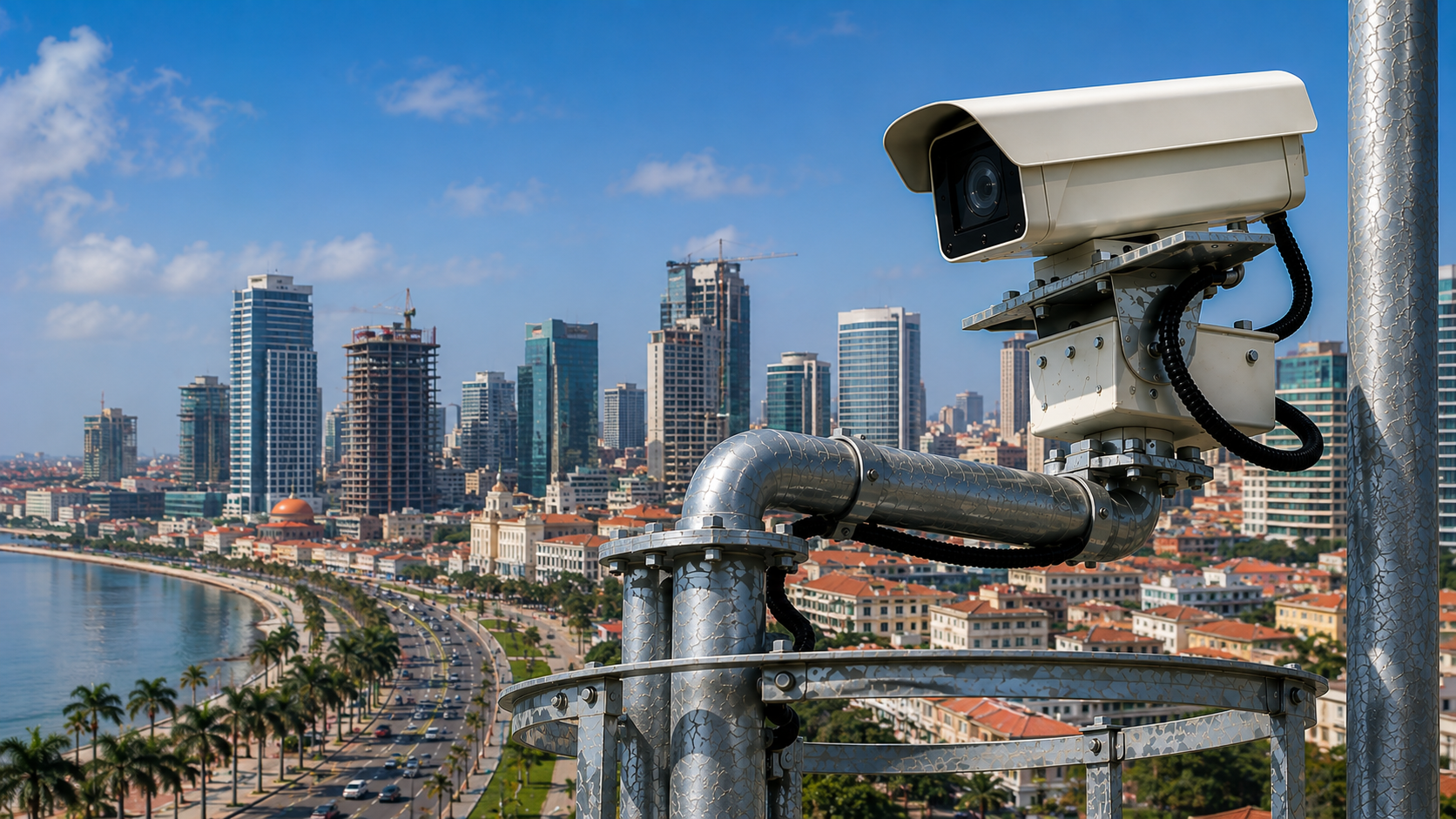
As Angola approaches the 2027 general elections, the rapid expansion of biometric identification, border-control technologies, and surveillance infrastructure is raising serious questions about privacy, democratic accountability, electoral integrity, and the protection of civic space.
A July 2026 report by Intelwatch, Biometrics, Border Control and Surveillance in Angola, examines the systems, vendors, legal safeguards, and political risks surrounding Angola’s emerging surveillance architecture. Based on field research in Angola and documentary analysis, the report focuses particularly on the country’s borders with the Democratic Republic of the Congo and Namibia and assesses the potential implications of these technologies for the 2027 electoral process.
For Friends of Angola, the central concern is not whether Angola should modernize its border-management systems. Modern technology can contribute to legitimate objectives such as combating trafficking, document fraud, illegal migration, and cross-border crime. The more urgent question is whether such powerful technologies are being introduced within a system capable of preventing abuse.
A Legitimate Security Need, but Weak Democratic Safeguards
Angola faces genuine border-security challenges. Its long and porous frontiers are associated with illicit diamond flows, human trafficking, arms movements, irregular migration, and instability in neighboring areas of the DRC. The Intelwatch report therefore recognizes that a modern border-management system can serve legitimate national-security purposes.
The problem lies in the context in which the technology is being deployed.
According to the report, the biometric expansion is taking place amid opaque procurement procedures, weak legal safeguards, a history of state repression, and an increasingly sensitive electoral environment. Under these conditions, technology designed for border management may also create capabilities for surveillance overreach and political control.
The systems under development include facial recognition, fingerprints, iris detection, voice recognition, biometric passports, national identity infrastructure, video-surveillance networks, and centralized data systems. The report describes contracts worth more than US$250 million combined, including a US$112 million biometric border project involving T4B and Dolinveste and a €130 million biometric passport and identity project involving Hungary’s ANY Security Printing.
Yet the report argues that procurement has occurred with insufficient public transparency and parliamentary scrutiny.
The Most Important Risk Is the Data, Not the Cameras
Public debate about surveillance often focuses on cameras, facial recognition, and equipment visible in public spaces. But the report identifies a deeper concern: the centralization of identity data.
Angola’s biometric projects are gradually creating an infrastructure that could link border systems, passports, national identity records, airports, consular databases, public-security systems, and a central data hub near Luanda.
This matters because Angola’s electoral register is derived from the country’s civil identity database rather than from a completely separate biometric voter-registration system.
Under amendments to the electoral-registration framework, the national identity database is increasingly connected to voter registration. The report notes that the voter card is expected to be used for the last time in the 2027 elections, after which the national identity card would become the principal registration credential.
The democratic implications are significant.
If the same state-controlled identity infrastructure is used to determine who is registered to vote, while security and intelligence institutions may also gain access to sensitive personal information, then data governance becomes an electoral-integrity issue.
The report warns that the danger to the 2027 elections does not necessarily depend on whether every biometric system works perfectly. The risks arise from political control of an unaudited identity database, unclear rules governing intelligence access, and a broader atmosphere in which surveillance can discourage political participation.
Intelligence Access Without Adequate Oversight
One of the report’s most serious findings concerns access to biometric and identity information by Angola’s intelligence structures.
At the Santa Clara border post, the report says the Serviço de Migração e Estrangeiros confirmed that SINSE can request access to relevant information under established protocols. However, those procedures are described as undefined and unpublished, with no clear judicial oversight mechanism.
Angola already has a legal framework for personal-data protection. The Constitution protects privacy, and Law 22/11 classifies biometric information as sensitive data. However, the report argues that enforcement against state institutions remains weak. It found no public record of the Data Protection Agency investigating or sanctioning a ministry, the SME, or an intelligence institution for unlawful data handling.
This creates a dangerous imbalance: the state is acquiring increasingly sophisticated capabilities to collect and combine personal information while independent institutions appear insufficiently equipped to supervise how that information is used.
A System That Is Both Expensive and Fragmented
The report also presents a striking contradiction between official ambitions and operational reality.
Despite major investments, researchers found no operational biometric controls at five border posts visited in Lunda Norte and Lunda Sul. Travelers there continue to rely largely on paper documentation verified manually.
Santa Clara, on the Namibia border, was identified as the only functioning biometric border post, but even that system was reportedly operating with reduced capabilities because fingerprint and height-capture functions had been discontinued because of maintenance constraints.
Along parts of the DRC frontier, border posts also suffer from severe infrastructure limitations, including poor electricity and connectivity, which makes sophisticated biometric systems difficult to operate.
This raises a fundamental public-interest question: What exactly are Angolan citizens receiving in return for hundreds of millions of dollars in surveillance and biometric contracts?
Transparency is essential not only because of human-rights concerns, but because public money is involved.
The Risk of Electoral Exclusion
Another major issue is access to identity documentation.
The report warns that large numbers of Angolans still lack national identity documents. If participation in the electoral process becomes increasingly dependent on possession of a national ID, citizens without documentation could face barriers to voting.
This could disproportionately affect poorer communities, people living in remote or border regions, and members of the diaspora. The report therefore recommends a transparent and inclusive civil-registration process before Angola completes the transition toward an identity-card-based voter-registration system.
The principle should be simple: technology must expand political inclusion, not create new pathways for disenfranchisement.
What Angola Should Do Before 2027
The report makes a number of recommendations that deserve serious public discussion.
Among them are calls for independent oversight of biometric technologies, publication of surveillance and biometric contracts, stronger parliamentary scrutiny, judicial authorization for intelligence access to sensitive identity data, independent auditing of the electoral register, and meaningful involvement of civil society.
It also recommends that Angola’s Data Protection Agency demonstrate that privacy law applies not only to private companies but also to powerful state institutions.
International partners and technology providers also have responsibilities. The report calls on foreign vendors and financing institutions to apply strong data-protection and transparency standards to their activities in Angola, while encouraging donors to support independent civil-society monitoring.
Technology Must Serve Citizens, Not Political Control
The debate over biometric systems in Angola should not become a simplistic debate between modernization and rejection of technology.
Biometric identification can improve public administration. Digital systems can make borders more secure. Modern documentation can reduce fraud. Surveillance technologies can support legitimate law-enforcement functions.
But these benefits depend on law, transparency, institutional independence, and democratic accountability.
The Intelwatch report concludes that Angola’s current system remains fragmented and, in many areas, operationally weak. Yet the more consequential development may be the gradual construction of a centralized identity and surveillance infrastructure accessible to powerful state institutions with insufficient external oversight.
That is why the period before the 2027 elections is so important.
Friends of Angola believes that protecting national security and protecting democratic rights are not competing objectives. Angola can do both. But doing so requires strong safeguards now—before powerful systems become deeply embedded in institutions that the public cannot effectively scrutinize.
The question Angola must confront is therefore not simply whether it should adopt biometric technology.
It is who controls the technology, who controls the data, who watches those who operate it, and whether Angolan citizens have meaningful mechanisms to challenge abuse.
The answer to those questions may have lasting implications not only for border security, but for the future of democratic accountability in Angola.