
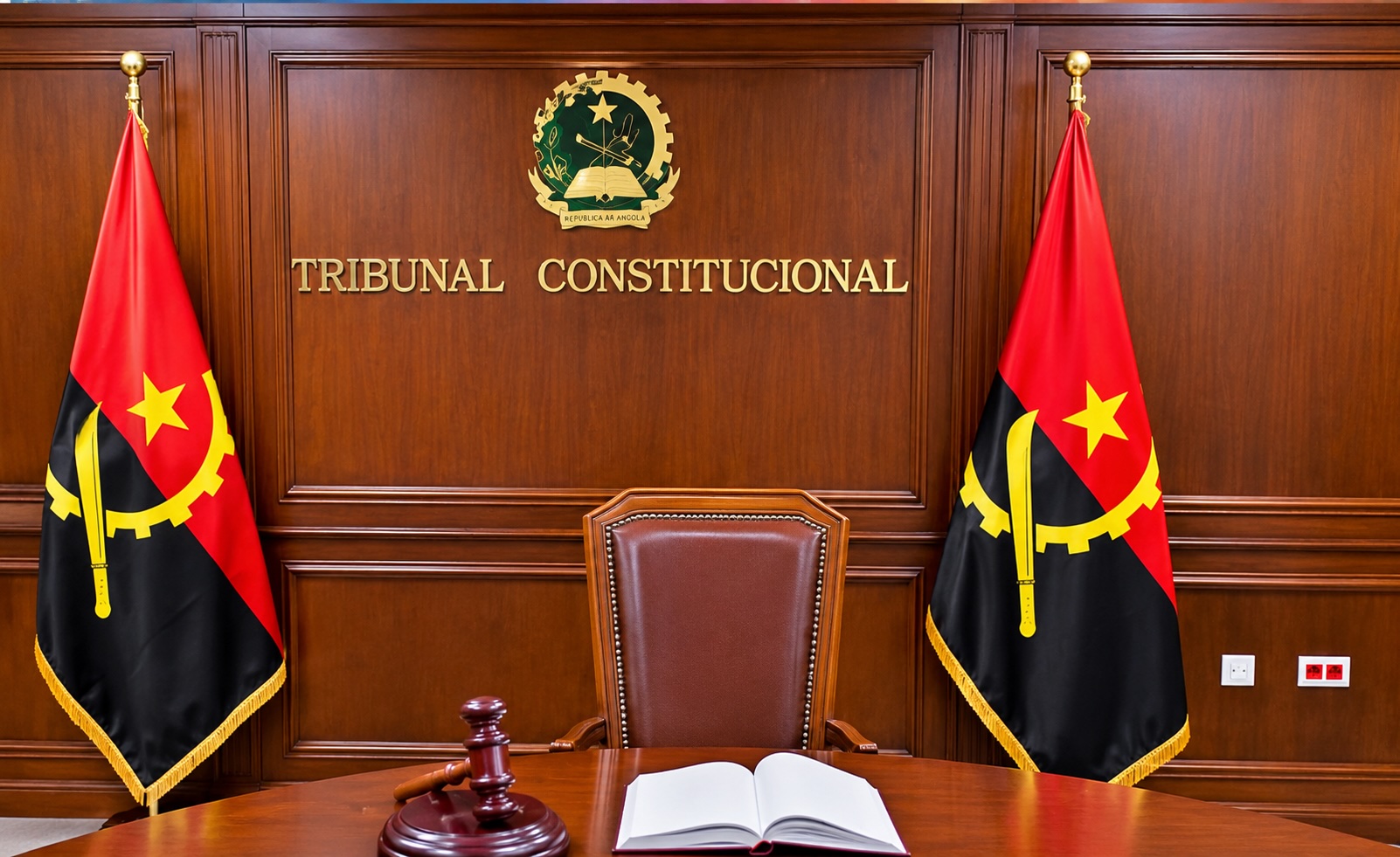
Constitutional Court Declares Certain Provisions of the NGO Law Unconstitutional While Upholding the Remaining Provisions Reviewed
By Friends of Angola
Ruling No. 1166/2026, dated November 3, follows a petition submitted by UNITA’s Parliamentary Group and establishes constitutional limits on certain mechanisms governing the administrative oversight, funding, and suspension of non-governmental organizations in Angola.
Angola’s Constitutional Court, through Ruling No. 1166/2026 of November 3, 2026, declared certain provisions of Law No. 2/26 of March 2, known as the Law on Non-Governmental Organizations (NGOs), unconstitutional, while upholding the validity of the remaining provisions examined.
The decision follows a petition for successive abstract constitutional review submitted by the Parliamentary Group of the National Union for the Total Independence of Angola (UNITA). The group challenged several provisions of the legislation, arguing that they could undermine fundamental rights, freedoms, and guarantees, particularly freedom of association, the autonomy of civil society organizations, and legal certainty.
The ruling represents a significant development in the debate surrounding the legal framework governing NGOs in Angola. It recognizes the State’s legitimate authority to regulate and oversee these organizations while establishing constitutional limits on administrative intervention.
Freedom of Association and Limits on State Intervention
One of the main issues examined by the Constitutional Court was whether the provisions of the NGO Law were compatible with the right to freedom of association, enshrined in Article 48 of the Constitution of the Republic of Angola.
UNITA’s Parliamentary Group argued that certain administrative authorization, registration, supervision, and oversight mechanisms could create excessive obstacles to the functioning of civil society organizations.
In its assessment, the Court acknowledged that freedom of association is a fundamental right but held that its exercise does not prevent the establishment of lawful regulatory and oversight mechanisms.
However, State intervention must respect the principles of legality, proportionality, legal certainty, and the protection of legitimate expectations.
In this context, the Court declared certain provisions relating to the administrative authorization regime unconstitutional because they failed to define sufficiently clear requirements and procedures applicable to NGOs.
The decision highlights the need for clear and predictable rules, preventing administrative action from depending on excessively vague or undefined criteria.
NGO Oversight and Supervision Deemed Constitutionally Permissible
Another central issue addressed in the ruling concerns the powers granted to State institutions to supervise, monitor, and oversee NGO activities.
The Court generally held that the oversight mechanisms established by law do not necessarily violate the Constitution, provided they are exercised within legally established limits.
The ruling recognizes financial transparency, the prevention of money laundering, combating terrorist financing, and organizational accountability as legitimate public-interest objectives.
Accordingly, the Court upheld several provisions concerning administrative supervision, reporting obligations, and monitoring of NGO activities.
Nevertheless, the legitimacy of these mechanisms does not mean that public authorities possess unlimited powers to interfere in the internal management of organizations.
Oversight must respect organizational autonomy and must not become an instrument of arbitrary interference with the lawful activities of civil society organizations.
Funding Restrictions Found Partially Unconstitutional
One of the most significant aspects of the decision concerns restrictions imposed on NGO funding.
The Constitutional Court declared Article 13(2)(j) of Law No. 2/26 unconstitutional, finding that its wording was excessively vague and failed to provide sufficient guarantees of legal certainty.
The provision allowed restrictions on organizational funding based on activities that could undermine constitutionally protected interests.
In the Court’s assessment, the use of such broad concepts, without sufficiently defined criteria, could create uncertainty about the circumstances in which administrative authorities could impose these restrictions.
The decision is particularly relevant to organizations that depend on domestic and international funding to implement projects in human rights, education, healthcare, social assistance, community development, and civic participation.
However, it is important to clarify that the Court did not declare all restrictions on NGO funding unconstitutional. Its decision concerned a specific provision, while other measures intended to ensure transparency and the legality of funding sources remain valid.
Suspension of Activities and the Need for Legal Certainty
The ruling also examined provisions granting administrative authorities the power to suspend certain NGO activities.
The Court recognized that the State may adopt legally established measures to protect legitimate public interests, including national security and the rule of law.
However, it found that certain expressions used in Article 30 were insufficiently precise and therefore incompatible with constitutional requirements concerning legal certainty and the protection of legitimate expectations.
Among the contested provisions were broad references to acts harmful to the sovereignty, security, and integrity of the Republic of Angola, as well as other insufficiently defined concepts.
The Court declared parts of these provisions unconstitutional, concluding that the absence of sufficiently clear criteria could grant administrative authorities excessive interpretative discretion.
The decision reinforces the importance of ensuring that any suspension measures have a clear legal basis and remain subject to the review and appeal mechanisms established by law.
Organizational Autonomy and Property Rights
Regarding property management, the Court examined provisions concerning the use of financial resources, capital transfers abroad, and the allocation of certain assets acquired or received by NGOs through their projects.
UNITA’s Parliamentary Group argued that some of these provisions could undermine organizational autonomy and property rights.
However, the Court generally concluded that the provisions examined did not violate freedom of association or the constitutional principles invoked.
It therefore upheld provisions concerning the management and allocation of certain assets, taking into account the specific nature and objectives of non-governmental organizations.
This interpretation, however, was not unanimously supported by all judges.
Justice Emiliana Morais Nangacovie Quessongo issued a dissenting opinion, expressing reservations about the assessment of provisions relating to NGO supervision and property, particularly Articles 7, 28, and 29.
The dissenting opinion highlights differing legal interpretations concerning the limits of State intervention in the administrative and financial autonomy of civil society organizations.
Implications for Angolan Civil Society
The Constitutional Court’s decision has important implications for the operation of non-governmental organizations in Angola.
First, it confirms that freedom of association is a constitutionally protected fundamental right that public authorities must respect.
Second, it recognizes the State’s legitimate authority to establish regulatory, oversight, and transparency mechanisms, particularly to prevent illicit financial activities.
Third, it demonstrates that these powers must remain subject to constitutional limits and cannot be based on vague, undefined, or otherwise incompatible provisions concerning legal certainty and proportionality.
The ruling also underscores the importance of ensuring a legal environment in which civil society organizations can operate with predictability, autonomy, and respect for legal obligations.
For NGOs, the ruling does not eliminate the oversight mechanisms established under Law No. 2/26. Rather, it establishes constitutional boundaries for certain powers granted to administrative authorities.
Consequently, the implementation of the legislation must take into account the provisions declared unconstitutional and the legal reasoning established by the Constitutional Court.
Conclusion: Balancing State Oversight and Freedom of Association
Ruling No. 1166/2026 represents an important development in the debate over the relationship between the Angolan State and civil society organizations.
By declaring certain provisions of the NGO Law unconstitutional, the Constitutional Court reaffirmed that the regulation of these organizations must comply with the limits established by the Constitution of the Republic of Angola.
At the same time, by upholding most of the provisions examined, the Court confirmed the State’s authority to establish mechanisms for oversight, transparency, and accountability among non-governmental organizations.
The central question arising from this decision is how to ensure that the implementation of the legislation effectively respects fundamental rights and does not create disproportionate administrative obstacles to the functioning of organizations.
NGO oversight and the protection of freedom of association should not be viewed as incompatible objectives. The challenge is to ensure that oversight mechanisms are transparent, proportionate, legally justified, and respectful of civil society’s autonomy.
In a democratic state governed by the rule of law, independent civil society organizations play an important role in citizen participation, public policy oversight, and the promotion of fundamental rights.
The Constitutional Court’s decision therefore provides an opportunity to deepen dialogue between public institutions and civil society organizations, with the aim of developing a legal framework that reconciles legitimate requirements for transparency and accountability with respect for constitutionally guaranteed freedoms.
Source: Constitutional Court of the Republic of Angola, Ruling No. 1166/2026, November 3, 2026, Case No. 1462-B/2026, concerning the successive abstract constitutional review of provisions of Law No. 2/26 of March 2 — Law on Non-Governmental Organizations.